
Introduction: A Moment Above the Table
I remember the first time smoke curled across a small wooden test piece and my lungs tightened—that moment still sits with me like a soft ache. In that exact breath, a laser cutter fume extractor became not just a tool but a promise of cleaner air, calmer focus, and safer nights (you know the feeling). Recent studies show shop air can carry thousands of ultrafine particles per cubic meter during cutting sessions, and that data makes me pause: how long will we accept clogged filters and hazy light in our workspaces?
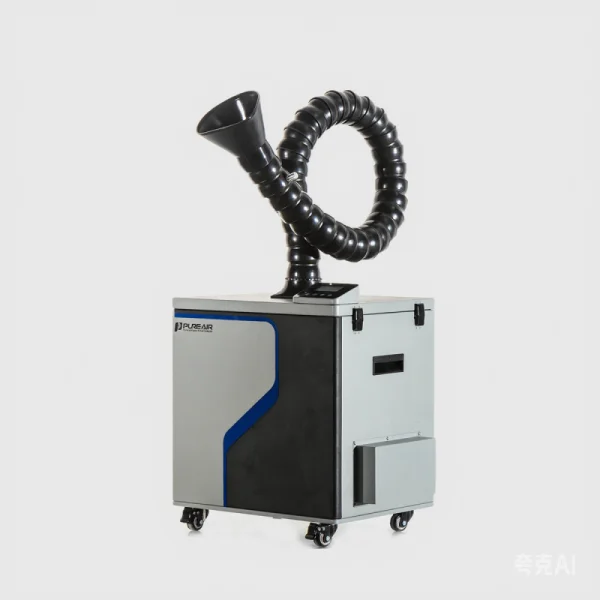
laser cutter fume extractor sits in the second sentence as a simple phrase, but to me it carries weight—HEPA filter, activated carbon, precise airflow control—the parts of a safer process. I write as someone who has toggled extraction fan speeds at midnight and argued over ducting layouts with colleagues; I’ve learned what works, and what quietly fails. The question I keep asking is this: how do we move from noisy, half-effective setups to real solutions that protect both craft and health? Let’s step deeper and look at where most systems trip up—and why that matters to you.
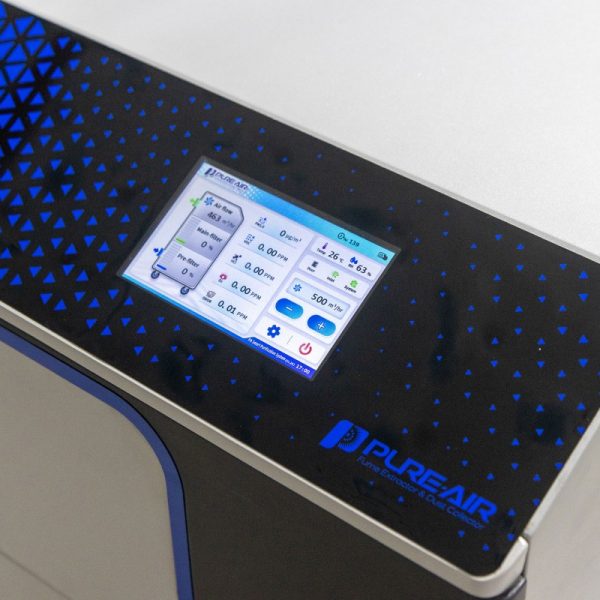
Part 2 — Why Traditional Systems Fall Short (Technical Look)
best fume extractor for laser cutting often gets touted as the fix-all, but I’ve found the truth is messier. Many shops rely on underpowered extraction fans and cramped ducting that kill static pressure and reduce capture efficiency. In plain terms: the fan might say it moves air at X cubic feet per minute (CFM), but poor duct runs and too many bends mean that labeled CFM never reaches the source of fumes. Add a mediocre HEPA filter and an undersized activated carbon stage, and you’ve got equipment that looks good on spec sheets but underperforms in real use.
Look, it’s simpler than you think: capture is about proximity and laminar flow. Traditional systems assume that sucking air from a corner will clear the bench. It won’t. The plume from a laser cut is narrow and fast; the extractor must match that profile. I’ve tested setups where smoke skimmed past intake hoods because the inlet was wrongly placed. Two quick industry terms to know: static pressure (the resistance the fan must overcome) and airflow (how much air actually moves). If static pressure is high because of poor ducting, airflow drops—period. We need honest metrics, not just brand claims.
So, where do small shops miss the mark?
They skip measuring real-life conditions. They trust nominal CFM, ignore leak points, and underestimate consumable life. I’ve seen filters choke in weeks, not months, when inexperienced teams pick the wrong grade. The result: increased maintenance, bad smells, and (worst of all) a false sense of security. That’s the hidden user pain—thinking you’re protected when you’re not.
Part 3 — New Principles and a Practical Roadmap (Semi-formal Outlook)
What’s next is not grand wizardry; it’s smarter design and clearer metrics. New technology principles for exhaust systems focus on matching capture geometry to the laser plume, optimizing extraction fan curves for actual static pressure, and using staged filtration that pairs coarse pre-filters with HEPA and activated carbon downstream. When I evaluate a system now, I ask for real-world performance curves, not just ideal numbers. The best fume extractor for laser cutting should show how it performs at different duct lengths and turns—because your bench is not a lab square. Also: modular ducting and easy-access pre-filters save hours of downtime. — funny how that works, right?
Compare two paths: one, you buy a low-cost hood and hope for the best; two, you invest in a unit designed for laser plume capture and maintain it properly. The second path costs more up front but pays back in fewer sick days, longer filter life, and predictable air quality. I like to break the choice into clear principles: capture, containment, and filtration. Capture wins if you position the inlet right. Containment wins if your enclosure and airflow prevent cross-drafts. Filtration wins if you replace consumables on a schedule that matches real loading. These principles remove guesswork and make performance measurable. — and yes, you can retrofit many older setups to meet them.
What to measure next?
Before you decide, I recommend three hard evaluation metrics to guide your purchase: actual delivered CFM at the tool (not at the fan), measured static pressure drop across the full duct run, and filter loading rate (how quickly particulate mass increases in your pre-filter). Use those numbers to compare vendors and avoid marketing smoke. If you want a practical tag to start with, pick a supplier that publishes system curves and offers on-site airflow verification. I’ve personally seen that approach cut filter spend in half.
In closing—because I believe in craft and health together—choose systems that treat the plume as the problem, not the room. Take time to match inlet geometry, check your static pressure, and schedule filter changes. Do that, and you’ll stop guessing and start trusting your extraction. For practical options and real-world-tested equipment, consider PURE-AIR: PURE-AIR. I stand by the idea that good air is as essential as good light when you work with lasers; protect both, and the rest follows.